
10 Practical Month-End Tips for Hotel Financial Controllers

Closing the month in a hotel or resort is a bit like turning around a plane in 30 minutes: you’re refuelling, cleaning, boarding, and re-checking everything while the clock is ticking.
On one side, owners and brands expect fast, accurate numbers. On the other, the operation never sleeps – rooms, F&B, spa, events, all generating new transactions while you’re trying to close the books.
These 10 practical tips are designed to help hotel and resort Financial Controllers tighten their month-end process without burning out the team.
1. Lock Your Daily Revenue Process First
If daily revenue isn’t clean, month-end will always feel like a rescue mission.
- Standardise night audit and income audit checklists.
- Resolve exceptions (rate changes, rebates, no-shows, complimentary rooms, etc.) on the same day, not at month-end.
- Ensure all outlets close their POS properly and all interfaces are monitored.
Result: By the time you reach the last day of the month, your revenue data should be 95% clean – you’re only dealing with timing differences, not detective work.
2. Maintain a Written Month-End Checklist (And Use It)
Don’t rely on memory – especially in a busy operation with staff changes.
Create a month-end checklist covering:
- Revenue cut-off and control reports
- Sub-ledger reconciliations (AP, AR, inventory, fixed assets, payroll)
- Bank reconciliations
- Journal entries (accruals, prepayments, reclasses)
- Service charge, taxes, and statutory items
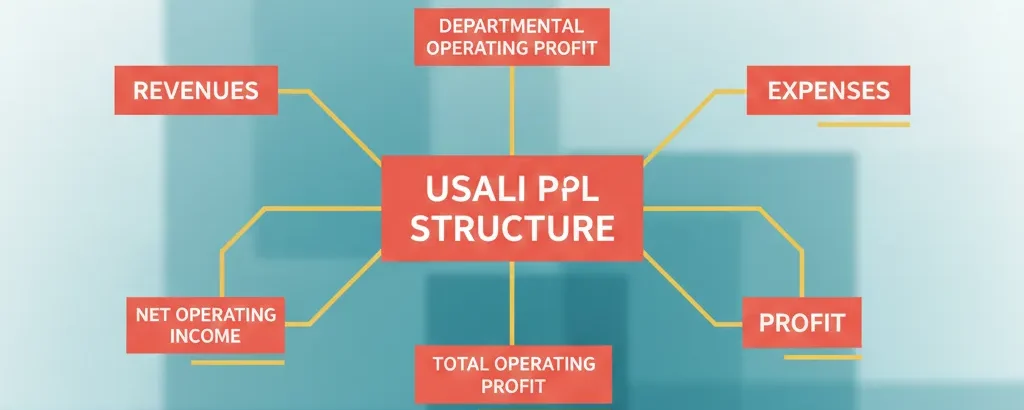
- USALI schedule checks (if applicable)
- Management & owner report packs
Assign each line to a specific person with a deadline and status (Not Started / In Progress / Completed). Review progress daily during the closing period.
3. Align the Calendar: Operational, Brand & Owner Deadlines
Closing “as fast as possible” is not a real plan.
Clarify your commitments:
- Brand reporting deadline (if branded)
- Owner reporting expectations
- Internal management review dates
Then work backwards:
- Define Day 0 (last day of month) tasks.
- Day +1: revenue finalisation, key accruals, main journals.
- Day +2: full P&L review and commentary.
- Day +3: final review, sign-off, submission.
Share this calendar with all department heads, not just finance. If they understand when numbers will lock, they’re more likely to cooperate with cut-offs and approvals.
4. Pre-Close High-Impact Items
Some items don’t need to wait for the last day.
A week before month-end, do a pre-close review:
- Check major balance sheet accounts: bank, AR, AP, advances, deposits.
- Review major expense lines vs. budget/forecast.
- Identify missing invoices for significant suppliers (utilities, key contracts, outsourced services).
- Estimate accruals ahead of time where consumption is predictable.
This reduces last-minute surprises and helps you focus on material issues, not small noise.
5. Strengthen Cut-Off: Goods, Services & Events
Hotels are infamous for blurred cut-offs: events straddling two months, goods received but not invoiced, long-stay guests, etc.
Simple practices help:
- Ensure GRNs (goods received notes) are posted daily and properly dated.
- For events and banquets, have a clear rule: revenue is recognised when the service is performed, not when the deposit is received.
- Maintain a “Goods Received Not Invoiced” (GRNI) report and clear it monthly.
- Track unbilled revenue (e.g., long-stay guests, corporate contracts) and ensure it’s invoiced promptly.
6. Build a Service Charge / Tips Reconciliation Routine
Service charge and tips are major staff-sensitive items.
At month-end:
- Reconcile service charge / tips collected vs. distributed.
- Confirm no variance between what’s charged to guests and what’s posted to payroll.
- Ensure taxes and statutory deductions (if any) are treated consistently.
Transparent, accurate treatment reduces staff complaints and audit issues.
7. Review P&L by Department – With Department Heads
Month-end is not just about producing reports; it’s about explaining performance.
Schedule short, focused P&L reviews with:
- Rooms
- F&B (by outlet if possible)
- Spa / Recreation
- Other minor operating departments
- Admin & Fixed charges (GM, HR, Engineering, Sales & Marketing, etc.)
In each meeting, walk through:
- Revenue vs. budget/forecast/last year
- Key expense lines and variances
- One-off items
- Agreed actions for next month
This builds ownership: departments begin to understand the financial consequences of their decisions.
8. Create a Simple “Red Flag” Dashboard
Before deep analysis, you need a quick “health check.”
Prepare a one-page dashboard showing:
- Occupancy, ADR, RevPAR vs. budget and last year
- GOP and GOP %
- Total payroll cost and payroll %
- F&B cost %, beverage cost %, key controllable expenses
- Any unusual spikes in repairs, travel, marketing, utilities
- Cash position and major overdue payables/receivables
Use colour coding (red/amber/green) to highlight key exceptions. This dashboard becomes your first page in the management pack.
9. Document Key Judgements & One-Offs
Owners, auditors, and future Controllers will all appreciate this.
For each month, maintain a simple “Month-End Notes” file containing:
- Major accruals and their basis (e.g., based on prior month consumption, contract terms).
- One-off items (e.g., insurance claim, legal settlement, one-time consultancy, pre-opening costs).
- Any changes in accounting treatment.
- Major system issues or manual overrides.
This creates a clear audit trail and makes future comparisons more meaningful.
10. Hold a Short Post-Mortem After Closing
Once the dust settles, spend 20–30 minutes with your team and ask:
- What went well this month?
- What slowed us down?
- What errors or rework did we have to fix?
- What can we automate or simplify before next month?
Capture 1–2 improvements and actually implement them. Over a year, these small changes transform your closing process.
Quick Template: Month-End Checklist Headings
You can build your own checklist under these headers:
- Revenue & Night Audit
- Accounts Receivable
- Accounts Payable & GRNI
- Inventory & Cost Control
- Payroll & Service Charge
- Fixed Assets & Capital Projects
- Bank & Cash
- Taxes & Statutory Items
- Management & Owner Reports
- Documentation & Archiving
Final Thoughts
A smooth month-end in hospitality finance is less about heroics and more about designing good habits and clear routines. When revenue is clean daily, cut-offs are respected, and your team understands the plan, you can close faster, speak more confidently with owners and brands, and spend more time on analysis, not just accounting.
You can adapt these tips to your property size, brand requirements, and local regulations. Start small, pick 2–3 changes for the next month, and build from there.


Responses