
Hotel & Resort Budgeting: A Practical Guide for Building a Strong Annual Plan (USALI-Aligned)

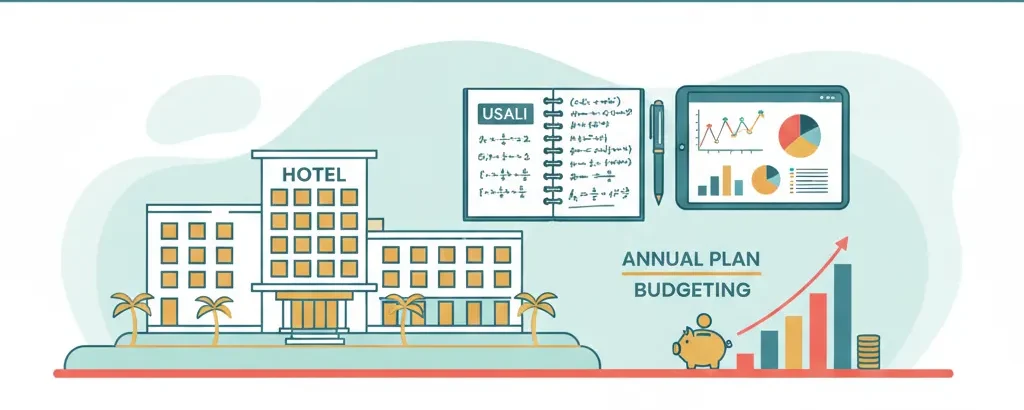
Budgeting in hotels and resorts isn’t just an annual finance exercise – it’s the operating blueprint for the entire property. A good budget translates strategy into measurable targets, aligns department leaders, supports staffing and purchasing decisions, and protects profitability in a business where demand can shift fast.
Below is a practical, hotel-specific approach to building an accurate, usable budget—especially for full-service resorts with multiple revenue centers.
Why hotel budgeting is different
Hotels don’t budget like typical businesses because:
- Revenue is perishable (an unsold room night is gone forever).
- Demand is volatile (seasonality, events, airlift, weather, geo-political risk).
- Many costs are semi-variable (labor, utilities, linen, amenities).
- Operations are multi-department with different drivers (Rooms vs F&B vs Spa vs Activities).
- Owner, brand, and management expectations often add constraints (fees, standards, reporting).
A strong hotel budget is driver-based, not guesswork-based.
The main budget types used in hotels
- Annual Operating Budget (AOP)
The primary plan for next year’s revenue, costs, GOP, and EBITDA. - Forecast / Reforecast (monthly or quarterly)
Updates the annual view using actual performance and latest demand signals. - Rolling Forecast (e.g., 12 or 18 months forward)
Popular for resorts with volatile demand; reduces the “once-a-year” budgeting shock. - CAPEX Budget
Room renovations, plant upgrades, IT systems, soft refurbishments, and compliance projects.
The hotel budgeting workflow (a proven sequence)
1) Set the budget calendar and responsibilities
Typical timing: 8 – 12 weeks from kickoff to approval.
- Week 1–2: Assumptions + topline targets
- Week 3–5: Department submissions
- Week 6–8: Review cycles + revisions
- Week 9–10: Owner/brand review
- Week 11–12: Finalization + loading into systems
Assign ownership early:
- Revenue assumptions: Revenue Manager + DOSM + GM
- Expense and staffing: HODs with Finance control
- Consolidation & challenge: Finance
- Final approvals: GM + Owner/Asset Manager + Brand (if applicable)
Step 1: Build solid planning assumptions
These assumptions shape every line of the budget:
Commercial assumptions
- Market demand outlook (tourism trends, airlift, competitor pipeline)
- Pricing strategy (rate positioning, channel mix, discounts)
- Group vs transient mix
- Event calendar and seasonality impacts
Cost assumptions
- Wage increments, service charge expectations
- Inflation for food, beverage, utilities, chemicals
- FX rates (critical for islands/resorts with imports)
- Insurance, contracts, outsourcing costs
Operational assumptions
- Room inventory availability (renovations, out-of-order plans)
- Outlet openings/closures, concept changes
- New services (kids club, excursions, experiences)
Step 2: Revenue budgeting by department (driver-based)
A) Rooms Revenue (the engine)
Rooms should be budgeted using occupancy, ADR, and room nights, not a flat growth %.
Key drivers:
- Available rooms (after OOO/OOS)
- Expected occupancy by month
- ADR by segment (BAR, corporate, wholesale, OTA, group)
- Cancellation/no-show patterns (if significant)
- Package components (rooms vs inclusions)
Core KPIs:
- Occupancy %
- ADR
- RevPAR
- Net RevPAR (after channel costs, if you track)
B) F&B Revenue (covers + spend)
Budget outlet-by-outlet. Resorts often have:
- Buffet restaurant
- Specialty restaurants
- Bars
- In-villa dining
- Banquets/events
Drivers:
- Covers (guests × capture rate)
- Average check / spend per cover
- Meal plan structure (HB/FB/AI impacts)
- Resident vs non-resident mix (if applicable)
C) Spa / Activities / Other Operating Departments
Drivers vary:
- Spa: treatment count × average rate, therapist productivity
- Excursions: participation rate × ticket price, boat utilization
- Retail: footfall × conversion × average basket
Step 3: Expense budgeting (the part that wins or loses GOP)
A) Labor planning (the biggest cost line)
Labor should be budgeted from a staffing plan, not last year + 10%.
Approach:
- Approved org chart by department
- Manpower count by role and grade
- Salaries, allowances, benefits
- Overtime policy
- Seasonal staffing changes
- Service charge allocations (where relevant)
Helpful productivity ratios:
- Rooms: Housekeepers per occupied room, Rooms cleaned per attendant
- F&B: Covers per waiter, labor hours per cover
- Engineering: planned maintenance vs reactive workload
B) Cost of Sales (F&B cost control)
Budget food and beverage cost using:
- Menu mix and portion costs
- Vendor pricing outlook
- Import duties/logistics (for resorts)
- Wastage and spoilage targets
Use realistic targets:
- Food cost % varies by concept (buffet vs fine dining)
- Beverage cost % varies by category (wine/spirits/cocktails)
C) Other Operating Expenses (OPEX)
Common high-impact areas:
- Utilities (electricity, gas, water) – often volatile
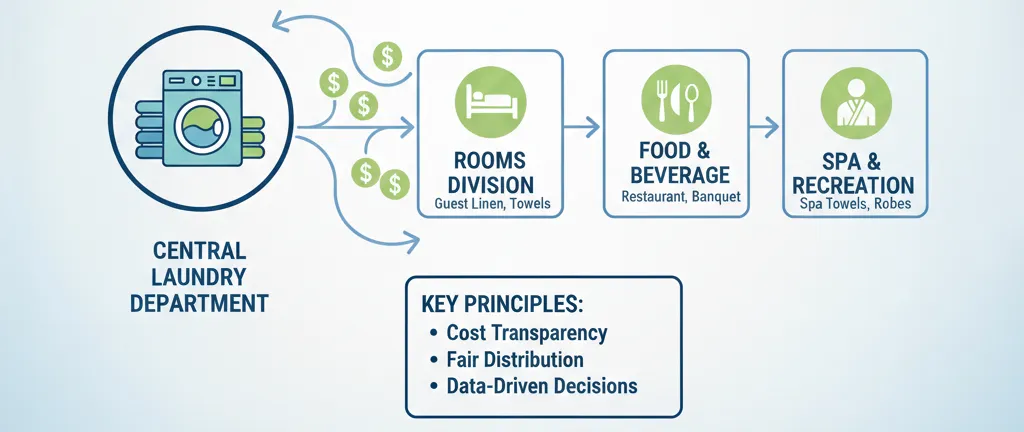
- Laundry and linen
- Guest supplies and amenities
- Marketing and distribution costs (commissions, ads)
- Repairs & maintenance and contracts
- IT systems, licenses, connectivity
- Staff welfare, recruitment, training
Best practice: classify each cost as fixed / variable / semi-variable and budget accordingly.
Step 4: CAPEX budgeting (protect the asset and guest experience)
A resort can hit its revenue targets and still fail long-term if CAPEX is ignored.
Include:
- Mandatory compliance and life-safety projects
- Guestroom soft goods, bathrooms, HVAC, desalination, generators
- IT infrastructure and cybersecurity upgrades
- Vehicles, boats, specialized equipment
- Sustainability investments (solar, heat recovery, smart meters)
Link CAPEX planning to:
- Guest satisfaction / quality scores
- Brand standards cycles
- Asset condition surveys
- Risk and safety priorities
Step 5: Build the full P&L and validate with “sanity checks”
Once the budget is consolidated, run checks that catch unrealistic plans:
- Does occupancy align with historical seasonality and known demand events?
- Are ADR assumptions consistent with rate strategy and competitor positioning?
- Do variable costs move logically with volume (covers, occupied rooms)?
- Are departmental margins reasonable by outlet type?
- Do utility expenses match expected occupancy and operating hours?
- Is payroll consistent with the staffing plan and service level?
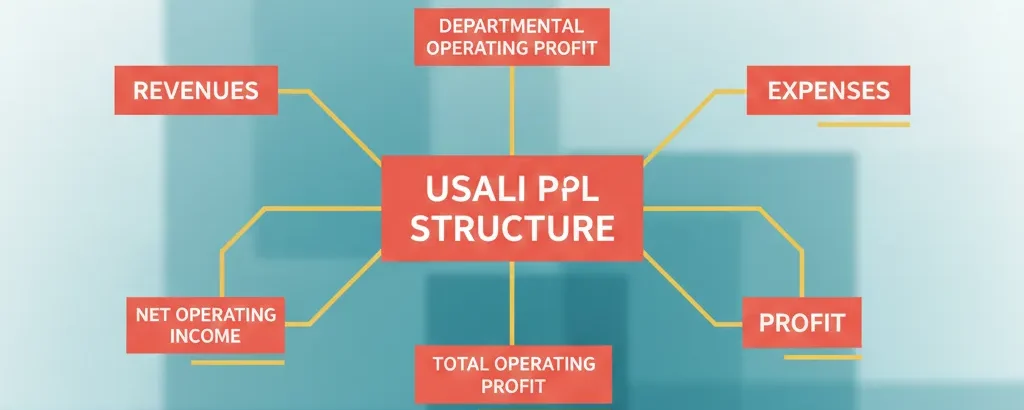
If you use USALI structure, validate by major schedules:
- Rooms, F&B, Spa/Other Ops, Admin & General, Sales & Marketing, Property Ops & Maintenance, Utilities, then GOP.
Step 6: Budget review process (make it operational, not just financial)
A budget works only if department heads believe in it and can execute it.
Strong review cycle:
- Department-by-department challenge meetings (HOD + Finance + GM)
- Document every assumption and key driver
- Final “stretch vs achievable” alignment with ownership
- Load into the accounting/reporting system with proper codes
Step 7: Monthly budget control (where budgets come alive)
A hotel budget is not a document – it’s a management rhythm.
Monthly practice:
- Flash + commentary early in the month
- Department variance analysis (volume, rate, mix, cost drivers)
- Action plan for top variances
- Update forecast based on pickup, pace, and cost changes
High-performing hotels use:
- Rolling forecast
- Scenario planning (base / optimistic / downside)
- Driver dashboards (occupancy pace, ADR, covers, labor hours)
Common budgeting mistakes (and how to avoid them)
Mistake: “Last year + 5%” budgeting
Fix: Use occupancy, ADR, covers, capture rates, and staffing drivers.
Mistake: Ignoring distribution costs
Fix: Budget commissions, channel costs, and marketing ROI by segment.
Mistake: Under-budgeting maintenance and utilities
Fix: Use trend analysis and planned maintenance schedules.
Mistake: Too many unrealistic targets
Fix: Separate stretch goals from the approved budget and track both.
Mistake: Budget is done once and forgotten
Fix: Monthly forecast discipline with clear accountability.
Tools that make hotel budgeting faster and more accurate
- PMS + RMS for demand and segment forecasting
- POS analytics for outlet-level capture and spend
- ERP / Accounting system for historical trends by account
- Excel / Power Query / Power Pivot for driver models and consolidation
- Power BI dashboards for pace, KPIs, and variance drivers
A simple “driver model” checklist (quick reference)
Rooms:
- Available rooms, occupancy, ADR, segment mix, net revenue
F&B:
- Guests in-house, capture rates, covers, average check, meal plans
Labor:
- Headcount, hours, productivity ratios, wage rates, benefits
Cost of Sales:
- Menu mix, vendor pricing, waste targets
Utilities & Maintenance:
- Occupancy-linked usage + fixed base load + planned projects
Closing thought
The best hotel budgets do two things at once:
- They’re realistic enough to manage daily, and
- ambitious enough to improve performance.


Responses