
How to Boost Hotel Finance Team Productivity in 2026: A Practical, Real-World Guide


Hotel finance teams in 2026 are under pressure. Expectations are rising: faster reporting, sharper insights, tighter budgets, and more cross-department collaboration. But the reality is, most finance teams are still juggling fragmented systems, manual processes, and the constant “end-of-month crunch.”
So how do you actually improve productivity without turning everything upside down or burning out your staff?
This guide lays out real-world strategies that work – not just the latest trends, but tools and tactics that finance teams can actually implement, even in complex hospitality environments.
1. Don’t Ditch Excel – Level It Up
Excel might not be the flashiest tool in your tech stack, but it’s still the one most finance teams rely on every day – and with good reason. In 2025, Excel has evolved into a serious analytical platform.
What’s New (and Useful) in Excel:
- Power Query for automated data cleaning – Automate data imports from CSVs, accounting systems, or PMS reports. Great for pulling daily revenue summaries or vendor lists.
- Power Pivot for advanced modelling – Build data models to analyse room revenue by channel, department costs by property, or YoY trends without crashing Excel.
- LAMBDA and dynamic arrays for custom, reusable logic – Create reusable custom formulas (like room margin or ADR adjustments) to standardize logic across files.
- Seamless integration with Power BI, cloud storage, and even APIs – Use OneDrive or SharePoint to co-author Excel files live – eliminates version control nightmares.
Junior team members: Learn Power Query to automate daily tasks.
Managers: Build standardized models with Power Pivot for faster reporting.
Directors: Champion Excel add-ons that connect to real-time systems (e.g., PMS exports, POS sales feeds).
You don’t need to replace Excel—you need to upgrade how you use it. When combined with automation tools or connected to a central data source, Excel becomes a powerful ally instead of a bottleneck.
2. Use Automation Thoughtfully – Not Every Tool Fits
Automation can help, but implementing AP/AR or bank reconciliation tools is rarely smooth. Many hotel systems aren’t built to integrate well, and “automation” often brings more complexity before it delivers results.
Realities of Hotel Automation:
- Accounts Payable: Tools like Stampli or Yooz can digitize invoice intake, approvals, and GL coding. But you’ll need to define consistent rules for each property.
- Accounts Receivable: Automating folio or event billing follow-up is hard if your PMS doesn’t cleanly separate accounts.
- Bank Reconciliation: BlackLine or even Excel macros can match transactions, but only if you have reliable data feeds and consistent naming.
What to Keep in Mind:
- Start small with automation pilots – like invoice intake or expense approval.
- Be honest about data quality and workflow consistency before choosing a tool.
- Look for solutions that extend Excel, rather than try to replace it.
- Expect a learning curve – especially across multiple properties.
Junior staff: Identify one repetitive task to automate (like copying payment data into a register).
Managers: Start with one property or function before rolling out across the portfolio.
Leaders: Plan automation around workflow – not just tools. Ensure training and data clean-up come first.
Automation is valuable, but it’s not magic. Treat it as a tool to assist – not overhaul – your finance operation.
3. Centralize Data Where It Counts
Fragmented data wastes time and causes errors. You don’t need a complete ERP overhaul but centralizing core financial data and standardizing reporting inputs can make a huge difference.
Realistic Ways to Centralize:
- Use a shared cloud drive for financial templates, close checklists, and property budgets.
- Connect your Excel models to a cloud database or tools like Power BI for consolidated views.
- Choose systems that offer open APIs or middleware support if full integration isn’t feasible.
Accountants: Use naming conventions and folders to stay organized.
Controllers: Standardize templates (journal entries, payroll accruals, flash reports).
Finance directors: Invest in middleware or tools that pull data from PMS/POS into a central reporting file or BI dashboard.
This doesn’t have to be perfect – just consistent. Even partial centralization helps eliminate email back-and-forth and version-control chaos.
4. Rethink FP&A as Agile Planning, Not Static Budgeting
In today’s unpredictable world, static budgets are outdated before Q2 even starts. What teams need instead is agile, rolling forecasts that reflect what’s happening on the ground. Annual budgets are still required but they should not be the only planning tool. Markets shift fast, and hotels need forecasting that adapts just as quickly.
How to Make FP&A More Dynamic:
- Move to quarterly rolling forecasts rather than once-a-year budgeting (or monthly for high-volume hotels).
- Use Excel models connected to live data for real-time updates.
- Test scenario modelling – occupancy drops, rate hikes, labour cost surges – so you’re not surprised later.
- Use driver based Forecast – costs and revenue based on inputs like staffing ratios, RevPAR, or room nights – so they update automatically
Junior team members: Learn to link forecast sheets with formulas, not manual values.
Managers: Own forecast assumptions and drive monthly forecast vs. actual reviews.
Leaders: Facilitate business-wide forecast discussions (sales, F&B, operations) using finance as the integrator.
Start with simple changes. Even basic forecasting adjustments can give management the flexibility they need to act fast.
5. Upskill Continuously – It Pays Off
Software is always evolving, and finance roles are becoming more strategic. To keep up, your team needs to be more than number crunchers – they need to think like analysts and advisors. In 2026, finance professionals need a hybrid skill set: technical, analytical, and strategic.
Focus on Skills That Add Value:
- Advanced Excel Move from formulas to macros, data models, and automation (Power Query, macros, modelling)
- Data visualization Learn visualisation tools to turn Excel tables into digestible visuals (Power BI, Tableau)
- Make sure everyone understands Finance fundamentals the P&L, balance sheet, and cash flow – not just their section
- Understanding ESG, tax, and local compliance
- Communication and presenting financials to non-finance staff
New hires: Offer onboarding bootcamps.
Mid-level: Encourage cross-training (AP staff learning forecasting, payroll learning labor analysis).
Senior finance: Set learning goals and budgets, and model ongoing development.
Offer short, regular learning sessions. One small new skill every month is better than an overwhelmed team trying to learn everything at once.
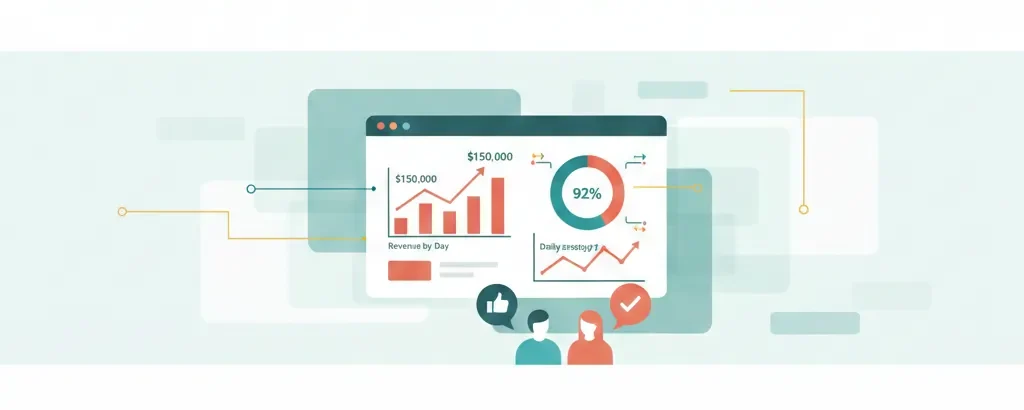
6. Use Dashboards for Clarity – Not Overkill
You don’t need 100 KPIs. What you need is a clear picture of what’s driving performance and the ability to see it before month-end.
Focus on KPIs That Matter:
- GOPPAR: Shows operational profitability per available room
- RevPAR vs. Budget: Are we hitting top-line targets?
- Labour cost as % of revenue: A key controllable expense
- Cash flow forecast accuracy: Are our predictions reliable?
- Aging reports / DSO: How long are receivables taking?
Team members: Track your department’s KPIs weekly.
Managers: Build dashboards in Excel with visual indicators.
Leaders: Use Power BI or Tableau for portfolio-wide performance views and share with GMs and owners monthly.
Use Excel-based dashboards or Power BI connected to Excel files – start simple and expand as your team gets comfortable.
7. Make Audit and Compliance Part of Daily Workflows
Audits shouldn’t be a fire drill. Build audit-readiness into your team’s monthly rhythm so it’s not a panic every year-end.
How to Stay Ahead:
- Maintain digital audit trails (emails, approvals, invoices) from day one.
- Create monthly mini-close templates that include key reconciliations.
- Use tools like AuditBoard or even Excel checklists for recurring controls.
- Save documentation (invoices, contracts, approvals) in a shared location
- Use checklists to confirm reconciliations, accruals, and reviews each month
- Schedule a quarterly self-audit for key controls: cash, inventory, payroll, AP
Junior staff: Learn what auditors look for – and keep your files clean.
Controllers: Keep documentation policies consistent across departments and locations.
Finance directors: Engage with internal audit or external CPAs early and maintain open communication.
You don’t need expensive software – you just need consistent processes and documentation.
8. Break Down Silos – Finance Is a Strategic Partner
Finance adds the most value when it is involved in business decisions – not just reporting after the fact. To really impact business performance, the finance team needs to be embedded in every major decision.
What This Looks Like:
- Assign finance liaisons to key departments like F&B, HR, and sales.
- Translate reports into actionable narratives for GMs and department heads.
- Attend weekly ops meetings and bring data that matters to frontline decisions.
Accountants: Get curious – ask how the numbers tie into daily operations.
Managers: Support department heads with timely insights and tools.
Finance leaders: Build trust through clear, empathetic communication and shared wins.
If you want buy-in, don’t just send reports – tell stories with numbers.
9. Make Sustainability Part of Financial Conversations
ESG (Environmental, Social, Governance) isn’t just an operations concern anymore – it’s increasingly part of your reporting and investment decisions. Sustainability initiatives need to be measurable to be manageable, and finance is key to making that happen.
Finance’s Role in ESG:
- Track cost and ROI of sustainable initiatives (solar, waste, water).
- Include ESG metrics in budget and performance reports.
- Understand new reporting frameworks (like CSRD) that apply to your properties.
Entry-level: Help gather data on utilities and vendor usage.
Managers: Include ESG metrics in budget variance reports.
Executives: Factor ESG risks and opportunities into long-term planning and capital requests.
This is where finance can lead – not just follow – by showing how sustainability supports profitability.
10. Protect Your Team From Burnout
Finally, productivity does not mean always doing more. A healthy team is a productive team – it comes from focus, process, and a team that feels supported.
Ways to Safeguard Your Team:
- Allow flexible hours – especially outside peak periods.
- Use templates and repeatable processes to reduce rework.
- Set realistic deadlines and spread work evenly across the month – not just at close
- Track workloads and redistribute when needed.
- Celebrate small wins. Finance often works behind the scenes – do not let good work go unnoticed.
Everyone: Speak up early if you’re feeling stretched.
Managers: Monitor team capacity and prioritize ruthlessly.
Leaders: Promote a “quality over speed” culture and protect your team’s energy.
Final Thoughts
Improving hotel finance productivity in 2026 is not about flashy software or chasing every shiny new tool. It’s about building smarter workflows, strengthening core skills, and enabling your team – at every level – to operate with clarity, consistency, and confidence.
Excel is still a hero when used to its full potential. Automation is valuable, but only when thoughtfully implemented in workflows that make sense. Dashboards should guide decisions not confuse. And above all, a healthy, supported finance team is a productive one.
Finance is not just a back-office function – it is a strategic advantage. It helps shape operations, inform decisions, and drive performance.
So respect the tools you already have. Be practical with tech. Invest in people. Build processes that work in your world – not someone else’s ideal.
That’s how real, lasting productivity is built.

Responses